Flu, RSV, or a Cold? How to Tell What's Making Your Child Sick

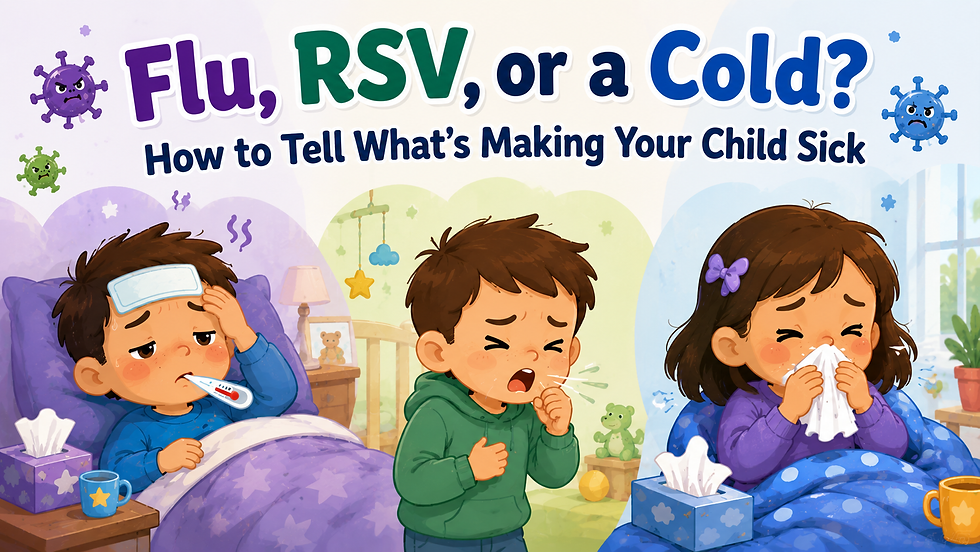
One day your child is playing, laughing, and full of energy. The next, they're curled up on the couch with a runny nose, cough, or fever. It's a situation every parent knows well, and it often comes with the same question: Is this just a cold, or could it be the flu or RSV?
Because these illnesses share many of the same symptoms, it isn't always easy to tell them apart. Understanding some of the key differences can help you know what to watch for, when supportive care may be enough, and when it's time to call your child's pediatrician.
Flu vs. RSV vs. Cold: What's the Difference?
Flu, RSV, and the common cold are all respiratory illnesses. Because many of their symptoms overlap, it isn't always possible to know which virus your child has based on symptoms alone.
Remember that children can experience these illnesses differently, and symptoms can overlap.
While symptoms can provide clues, the only way to know for certain which virus is causing your child's illness may be through testing when recommended by your pediatrician.
What Does a Cold Look Like in Children?
The common cold is one of the most frequent illnesses children experience. While it can make kids feel miserable for a few days, most colds are mild and improve with time.
Typical cold symptoms include:
Runny or stuffy nose
Sneezing
Sore throat
Mild cough
Low-grade fever in some children
Mild tiredness
Decreased appetite
One clue that points toward a cold is that many children still have some energy and continue playing, eating, and drinking fairly normally. Symptoms often develop gradually and improve with rest, fluids, and time.
A cold usually gets better on its own without specific treatment. Antibiotics do not treat viral illnesses such as the common cold.
What Are Flu Symptoms in Children?
Unlike a cold, the flu often seems to hit all at once. Parents frequently describe a child who appeared fine in the morning but developed fever, fatigue, and a cough by the end of the day.
Flu symptoms may include:
Fever
Chills
Cough
Sore throat
Headache
Muscle or body aches
Significant tiredness
Decreased appetite
Runny or stuffy nose
Vomiting or diarrhea, particularly in some children
While every child experiences the flu differently, many parents notice that children with influenza simply look and feel more unwell than they do with a typical cold. They may have very little energy, spend more time resting, and show less interest in eating, drinking, or playing.
If your child has symptoms that could be influenza, especially during flu season, contact your pediatrician to discuss whether evaluation or antiviral treatment may be appropriate.
What Are the Symptoms of RSV in Children?
Respiratory syncytial virus (RSV) is a very common respiratory virus, especially in infants and young children. Many children will have RSV at least once during early childhood.
At first, RSV can look a lot like a cold. That's one reason it can be difficult for parents to know exactly what's causing their child's symptoms.
Early RSV symptoms may include:
Runny nose
Congestion
Cough
Decreased appetite
Fever
Fussiness or tiredness
While older children often recover from RSV with mild symptoms, infants and some young children can develop inflammation in the lower airways. When that happens, parents may notice wheezing, faster breathing, or signs that breathing is becoming more difficult.
Babies may also show different signs when they're having trouble with a respiratory infection. They may feed less, become unusually sleepy or irritable, or have noticeable changes in their breathing.
Which Children Are at Higher Risk for Severe RSV?
Although most children recover without complications, RSV can sometimes cause more serious illness.
Children who may be at higher risk include:
Infants younger than 6 months
Premature infants
Children with chronic lung disease
Children with certain heart conditions
Children with weakened immune systems
If your child falls into one of these groups, contact your pediatrician if they develop respiratory symptoms or if you have concerns about how they are breathing, eating, or drinking.
Flu vs. RSV: Which Is Worse?
Many parents ask whether RSV or the flu is "worse," but the answer depends on the child.
Both illnesses can range from mild to severe. RSV tends to be most concerning in young infants because it can affect the small airways in the lungs and lead to bronchiolitis or pneumonia. The flu can also cause serious complications, including pneumonia, dehydration, and hospitalization.
Rather than focusing on the name of the virus, it's often more helpful to pay attention to how your child is doing overall. Changes in breathing, hydration, activity level, and alertness can provide important clues about whether medical evaluation is needed.
How Can You Tell If Your Child Has a Cold, Flu, or RSV?
Unfortunately, symptoms alone don't always provide a definite answer.
All three illnesses can cause:
Cough
Congestion
Runny nose
Fever
Tiredness
Decreased appetite
The pattern and severity of symptoms can provide clues, but testing may be needed in certain situations.
Your pediatrician may consider your child's age, symptoms, medical history, exposure to illness, and which viruses are currently circulating when deciding whether testing or treatment is appropriate.
When Should You Call Your Child's Pediatrician?
Most coughs, colds, and viral illnesses improve with supportive care at home. However, parents know their children best, and it's always reasonable to call your pediatrician if something doesn't seem right.
Contact your pediatrician if your child has:
A persistent fever or a fever that concerns you
Difficulty staying hydrated
Significantly decreased urination
Symptoms that are getting worse instead of better
Persistent or worsening cough
Wheezing
Unusual sleepiness or difficulty waking
Poor feeding, particularly in an infant
Symptoms in a child with an underlying medical condition
For young infants, especially those under 3 months old, fever should always be discussed promptly with a healthcare professional.
Signs Your Child May Be Having Trouble Breathing
Breathing problems deserve immediate attention.
Watch for signs such as:
Breathing much faster than usual
Ribs or skin pulling inward with each breath
Nostrils flaring
Grunting while breathing
Persistent wheezing
Pauses in breathing
Difficulty speaking, crying, or feeding because of breathing problems
Blue, gray, or pale-looking lips or skin
If your child is struggling to breathe, appears severely ill, is difficult to wake, or has blue or gray lips or skin, seek emergency medical care immediately.
What Can You Do at Home?
When children are sick, parents often want to know what they can do to help. While there isn't a cure for most viral illnesses, simple supportive measures can help keep your child comfortable while their body recovers.
Encourage Fluids
Offer breast milk, formula, water, or other age-appropriate fluids as recommended for your child. Staying hydrated is especially important when children have fever, vomiting, or decreased appetite.
Signs of good hydration include regular urination, moist lips and mouth, and tears when crying. Fewer wet diapers or infrequent trips to the bathroom may be signs of dehydration.
Help With Congestion
For babies and young children, saline drops and gentle nasal suctioning may help relieve congestion, particularly before feeding or sleeping.
Encourage Rest
Children often need more sleep and quiet time while they're sick. Let your child's energy level guide how much activity they do.
Monitor Symptoms
Pay attention to breathing, hydration, fever, appetite, and behavior. Sometimes the most important sign isn't the cough itself but a noticeable change in how your child is acting.
Be Cautious With Medications
Always use age-appropriate medications and dosing instructions. Do not give aspirin to children unless specifically instructed by a healthcare professional.
For infants and young children, ask your pediatrician or pharmacist before giving over-the-counter cough or cold medicines.
Can You Prevent Flu, RSV, and Colds?
You can't prevent every childhood respiratory infection, but several everyday habits can help reduce the spread of viruses.
Encourage your family to:
Wash hands regularly
Avoid close contact with people who are sick
Cover coughs and sneezes
Clean frequently touched surfaces
Avoid sharing cups, utensils, and personal items
Keep sick children home when appropriate
Follow recommended childhood immunizations and preventive measures
Annual influenza vaccination is recommended for most children 6 months and older. For RSV, preventive immunization options may be available for certain infants and young children. Your pediatrician can discuss what is appropriate based on your child's age and health history.
The Bottom Line for Parents
When your child develops a cough, congestion, or fever, it's natural to wonder whether you're dealing with a cold, the flu, or RSV. The truth is that these illnesses can look very similar, especially during the first few days.
Instead of trying to identify the virus on symptoms alone, focus on what matters most: Is your child breathing comfortably? Are they staying hydrated? Are they acting like themselves? Are symptoms improving over time?
Trust your instincts. If you're concerned about your child's symptoms or aren't sure what to do next, your pediatrician can help guide you.
Most importantly, seek immediate medical care if your child develops signs of breathing difficulty, severe dehydration, or appears significantly ill.
Need Pediatric Care in Arizona?
At Agave Pediatrics, our pediatric team provides comprehensive healthcare for infants, children, and adolescents. If your child is experiencing respiratory symptoms and you're concerned about their health, contact our office to discuss the appropriate next step.
Agave Pediatrics has locations in Glendale, Goodyear, Scottsdale, Phoenix North, and Chandler, Arizona.
Frequently Asked Questions
.
Is RSV worse than a cold in children?
RSV can cause symptoms similar to a cold, particularly in older children. However, it can sometimes cause more serious respiratory illness, especially in young infants and children at higher risk for complications.
How can I tell if my child has the flu or a cold?
Flu often begins more suddenly and may cause fever, body aches, significant fatigue, and cough. Colds tend to develop more gradually and are often dominated by nasal symptoms. However, symptoms overlap, so a pediatrician may be needed for an accurate assessment.
Can a child have RSV without a fever?
Yes. Fever is not present in every child with RSV. Congestion, cough, decreased appetite, and breathing changes can occur without a significant fever.
How long does RSV last in children?
Many children recover from RSV within a week or two, although cough and other respiratory symptoms can sometimes last longer. The course varies depending on the child's age and overall health.
Can RSV turn into pneumonia?
In some children, RSV can lead to lower respiratory tract infections such as bronchiolitis or pneumonia. Contact your pediatrician if your child develops worsening breathing symptoms, poor feeding, signs of dehydration, or increased lethargy.
When should I worry about my child's cough?
Contact your pediatrician if your child's cough is worsening, interfering with eating or drinking, accompanied by wheezing or breathing difficulty, or associated with other concerning symptoms.
Can children get flu and RSV at the same time?
It is possible for a child to have more than one respiratory infection at the same time, although symptoms alone cannot confirm a co-infection. Your pediatrician can determine whether testing is appropriate.
Medical Disclaimer: This article is intended for general educational purposes and is not a substitute for professional medical advice, diagnosis, or treatment. If you are concerned about your child's symptoms, contact your pediatrician. In an emergency, seek immediate medical care.