Why Kids Are Getting Sick More Often

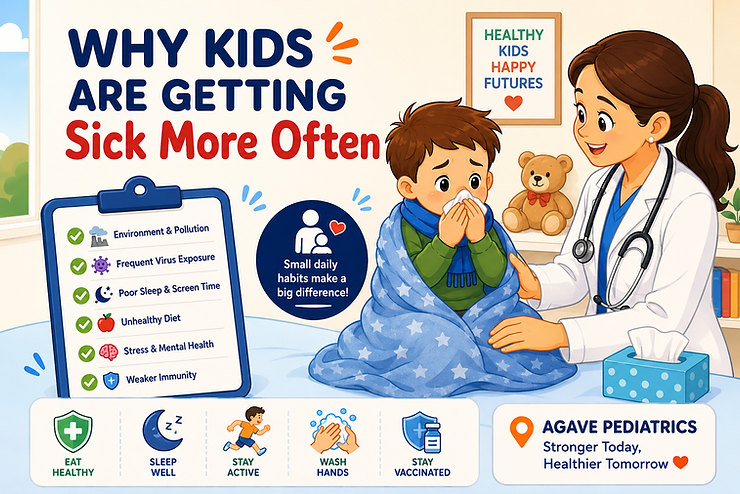
Many parents today feel like their children are constantly battling coughs, colds, fevers, stomach bugs, or allergies. While occasional illnesses are a normal part of childhood, many pediatricians are noticing that kids seem to be getting sick more frequently than before. Experts point to several contributing factors, including changing environments, pollution, increased exposure to viruses, sleep problems, stress, and lifestyle habits.
At Agave Pediatrics, we help families understand why frequent illnesses happen and how parents can support stronger, healthier immune systems in children.
Is It Normal for Kids to Get Sick Frequently?
Yes — especially for babies, toddlers, and young school-age children. Children’s immune systems are still developing, and exposure to new viruses helps their bodies build immunity over time.
Experts note that children in daycare or school settings may experience frequent illnesses because they are exposed to many germs for the first time.
Young children may commonly have the following:
6–10 colds per year
Occasional stomach viruses
Ear infections
Seasonal allergies
Respiratory infections
The good news is that this often improves as children grow older and their immune systems mature.
Common Reasons Kids Are Getting Sick More Often
1. Getting Sick Often at School and Daycare
School and daycare are places where kids can easily catch viruses because of:
Toys and things that everyone touches
Being close to kids
Coughing and sneezing on each other
Not washing hands properly
When children start going to daycare or preschool, they usually get sick a lot in the first year. This happens to kids at school and daycare. School and daycare are where kids can catch viruses easily.
2. Weaker Sleep Habits
Sleep plays a major role in immune health. Many children today are getting less sleep due to:
Increased screen time
Busy schedules
Irregular bedtime routines
Lack of sleep can make it harder for the body to fight infections effectively.
3. More Screen Time and Less Outdoor Play
Experts are increasingly concerned that modern childhood involves:
Less outdoor activity
More indoor time
Reduced physical movement
Higher screen exposure
Outdoor play supports physical health, vitamin D production, stress reduction, and immune system development.
4. Air Pollution and Environmental Changes
Air pollution and changes in the environment are making kids sick all over the world. Doctors who take care of kids say that bad air, smoke, things that cause allergies and weird weather can make kids have breathing problems and allergies.
Kids have lungs, and their bodies are still getting stronger, so they get sick more easily when the air and environment are bad. Air pollution is really bad for kids because their lungs and bodies are still growing.
5. Poor Nutrition
Eating a lot of junk food and sweets and not eating fruits and vegetables can make our immune system weak over time.
Our body gets help from healthy food in many ways. Helpful:
Immune cells
Our gut health
Our energy levels
Our body recovers from illness
We need to eat a diet that has a lot of protein, fruits, vegetables and plenty of water especially when we are growing up like when we are children.
6. Stress and Mental Health
Stress can affect children physically as well as emotionally. Academic pressure, overscheduling, social stress, and lack of downtime may impact immune health and sleep quality.
Children need time for:
Rest
Play
Emotional connection
Relaxation
Physical activity
7. Seasonal Viruses Are Still Circulating
There are still a lot of seasonal viruses going around. Seasonal viruses like RSV, the flu, rhinovirus and stomach bugs are spreading quickly among kids, especially when these seasonal viruses are at their peak. Some doctors who take care of kids say that the illnesses that affect the lungs and breathing are lasting longer than they did in the past when it comes to these seasonal viruses.
How Parents Can Help Strengthen Their Child’s Immune System
Encourage Healthy Sleep
Children need consistent, age-appropriate sleep every night.
Prioritize Nutritious Foods
Offer:
Fruits and vegetables are very good for us
Protein-rich meals are also important
We should also eat grains
We must drink plenty of water to stay healthy.
Promote Outdoor Activity
Daily outdoor play supports physical and emotional health.
Teach Good Hygiene Habits
Help children:
Wash hands properly
Cover coughs and sneezes
Avoid sharing drinks and utensils
Stay Up to Date on Vaccines
Vaccinations remain one of the best ways to protect children from serious illnesses.
Schedule Regular Pediatric Visits
Routine checkups help monitor growth, development, nutrition, and overall wellness.
When Should Parents Be Concerned?
Frequent mild illnesses are common, but parents should contact a pediatrician if a child:
Has unusually severe infections
Needs frequent antibiotics
Has trouble gaining weight
Experiences breathing difficulties
Has persistent fever or fatigue
Misses school often due to illness
Final Thoughts
Kids these days have to deal with a lot of things that can make them sick often like the way the earth is changing, all the pollution and also things like how they sleep, how stressed they are, and being around viruses all the time. The good thing is that doing things every day and going to the doctor when you are supposed to can really help.
At Agave Pediatrics we want to help families make sure their kids have strong immune systems and grow up healthy. If you are worried because your child gets sick a lot, the pediatric team at Agave Pediatrics is here to help you with your child.